
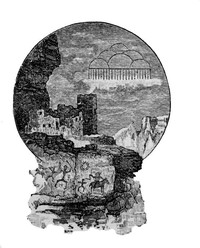
An Introduction to the Study of the Maya Hieroglyphs by Sylvanus Griswold Morley
Let's set the scene. It's the early 20th century. In the jungles of Central America, archaeologists are uncovering incredible lost cities—places like Copán and Chichén Itzá. These sites are covered in stunning, complex carvings. The experts of the day knew these glyphs were a writing system, a real language. But for centuries, no one could read a single word. It was a complete mystery. 'An Introduction to the Study of the Maya Hieroglyphs' is Morley's attempt to teach people the first, hard-won steps to breaking that code.
The Story
This isn't a novel with a plot, but the story it tells is incredible. Morley walks you through the basics of the Maya calendar, which was the first part of the writing system scholars figured out. He shows you how to identify glyphs for days, months, and years. Then, he moves on to the harder stuff: the glyphs for towns, people, and events. He fills the book with drawings from actual monuments, so you're learning from the source material. The "story" is the slow, patient work of reconstruction—taking a shattered vase of knowledge and trying to glue the pieces back together, one glyph at a time.
Why You Should Read It
What makes this book special is the palpable sense of excitement. Morley wasn't some distant academic; he was a boots-on-the-ground archaeologist who helped make these discoveries. You can feel his passion on every page. Reading it, you get to experience that 'aha!' moment from a century ago. You start to see the patterns. That squiggly shape isn't just art; it means "sun." That grouping of bars and dots isn't random; it's a date. It turns intimidating stone carvings into a legible, fascinating history. It makes you feel smart, like you're in on a secret that was lost for a thousand years.
Final Verdict
This is the perfect book for a curious mind who loves history, puzzles, or true adventure stories. It's for the person who watches documentaries about lost civilizations and wants to go deeper. While it's a serious academic work, Morley's clear and enthusiastic writing makes it surprisingly accessible. Fair warning: it's not a breezy beach read. You'll need to pay attention. But if you give it a chance, you'll walk away looking at the ancient world—and the patient work of understanding it—in a whole new way. Think of it as the foundational training for your own inner Indiana Jones.
This work has been identified as being free of known copyright restrictions. Share knowledge freely with the world.
John Moore
9 months agoRight from the opening paragraph, the formatting on mobile devices is surprisingly crisp and clear. I’ll definitely be revisiting some of these chapters again soon.
Matthew Davis
4 months agoI was particularly interested in the case studies mentioned here, the wealth of information provided exceeds the average market standard. Truly a masterpiece of digital educational material.
Michael Davis
1 month agoFrom a researcher's perspective, the visual layout and supporting data make the reading experience very smooth. A solid investment for anyone's personal development.
Linda Moore
3 months agoWhile browsing through various academic sources, the clarity of the writing makes even the most dense sections readable. An excellent example of how quality digital books should be formatted.




Robert Lopez
4 months agoI found the data interpretation to be highly professional and unbiased.