1

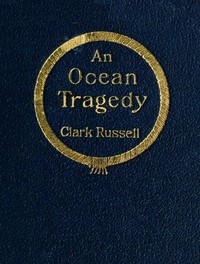
An Ocean Tragedy — Background and Themes
11
4
Project Gutenberg
2018
Sea stories; English fiction -- 19th century
Readers of public-domain and historical texts
Project Gutenberg digital edition
en
Edition facts
Words: 194,065
Reading time: 844 min
Text sections: 39
Source:
Project Gutenberg record #56363
A sea voyage turns ominous when a yacht's crew hears mysterious voices from the hold, echoing a warning from a wreck. Russell's novel builds tension through collective superstition, precise nautical detail, and a narrator caught between skepticism and unease.
From its opening chapter, An Ocean Tragedy establishes a world where the sea is both a setting and a source of dread. The narrator, Sir Wilfrid Monson, is introduced to the yacht Bride through a series of mundane details—a valet's announcement, the time of night—that quickly give way to unease. The crew's talk of a voice speaking from below decks, heard first from a wreck and now from the hold, creates a pattern of recurring, unexplained phenomena. Russell anchors this supernatural thread in the physical realities of shipboard life: the smell of the forecastle, the motion of the yacht, the sailors' strained faces. The result is a narrative that balances psychological tension with the gritty texture of a working vessel.
The Voice Below
The central mystery in the excerpts is a voice that speaks from the hold of the Bride. The crew is unanimous that they heard human syllables, but their accounts differ: some claim the voice said the yacht was cursed, others that it ordered them to sail home. The narrator, fresh from hearing similar voices from a wreck, finds himself impressed by the men's agreement yet struggles to suppress a smile at their postures. Russell uses this collective testimony to blur the line between superstition and fact. The voice is never directly quoted in full, leaving its exact words ambiguous—a technique that heightens uncertainty. The scene is rendered with sensory detail: the flaring lamp, the sliding shadows, the seaman whose face resembles a melon half buried in a blanket. The reader is left to wonder whether the voice is real, a shared delusion, or something else.
Character and Credulity
Russell populates the forecastle with a gallery of distinct seamen, each reacting to the mystery in his own way. Old Jacob offers one interpretation; Crimp grunts a different version; a sailor with a face like an over-ripe lemon lies blinking on his back. The narrator's own position is complex: he is skeptical enough to note the embellishments, yet he cannot dismiss the sincerity of the men. The valet Muffin, described with a blend of alarm and sleek apology, adds a comic note that undercuts the tension. Finn, the mate, tries to impose rational order—asking what the voice said, calling for silence—but his authority is tested by the crew's conviction. This interplay of credulity and doubt gives the novel a psychological edge, as the reader must decide where to place trust.
Nautical Texture and Atmosphere
The excerpts are rich with the physical details of life at sea. The forecastle is described as having an odour improved by the flaring snuff of the lamp, and the motion of the yacht is felt more strongly forward than aft. The narrator notes the lift and fall of the bows, the sulky wash of the sea, and the creaking noises of the fabric. These details ground the supernatural events in a tangible world. Russell also uses the setting to amplify the mood: the warm night, the dim light, the sliding shadows. The sailors' postures—bolt upright like a sentry, legs hanging like broomsticks—create a visual tableau that is both vivid and slightly grotesque. This attention to the physical environment ensures that the mystery feels anchored in the real, making the intrusion of the inexplicable all the more unsettling.
Readers approaching An Ocean Tragedy should attend to the way Russell builds suspense through collective testimony and sensory detail. The voice from the hold is never fully explained in these excerpts, and the narrator's own skepticism remains intact. The novel rewards attention to the crew's individual reactions and to the precise language of the sea. The dedication to Herman Melville signals a literary lineage, but Russell's voice is his own—direct, observant, and unafraid of the uncanny.
Reader reflection
How will you remember this book?
Save your reaction, strongest insight, and memorable passage.
Your progress
0
/
10
2
Was reading this book enjoyable?
3
Would you encourage someone else to read it?
4
How demanding did the text feel?
5
How useful did the reading feel?
6
Was the book moving at the right speed?
7
Which element worked best for you?
8
How closely did the book connect with your experience?
9
What changed or sharpened your thinking?
10