
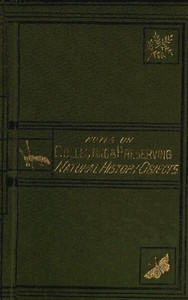
Notes on Collecting and Preserving Natural-History Objects by J. E. Taylor et al.
Let's be clear from the start: this isn't a book with a plot in the traditional sense. There are no characters, unless you count the earnest Victorian naturalist as a type, and no story arc. Instead, Notes on Collecting and Preserving Natural-History Objects is a practical field manual from a bygone era. It's a compilation of advice from J.E. Taylor and several other experts on how to build a personal cabinet of curiosities.
The Story
The 'story' is the process itself. The book walks you through the entire, often gruesome, journey of a specimen. It starts with how to ethically(ish) collect creatures from the shore, field, and forest. Then, it gets into the nitty-gritty: recipes for preservative fluids, diagrams for setting butterflies, and methods for skinning and stuffing mammals and birds. Each chapter is a fight against time and decay, offering solutions for problems like keeping a sea anemone's shape or preventing beetles from being devoured by other bugs. It's a systematic, step-by-step guide to conquering nature's tendency to fall apart, written with the absolute conviction that doing so is a noble and important pursuit.
Why You Should Read It
I loved this book for the window it provides. You're not just learning outdated techniques; you're getting inside the head of a 19th-century amateur scientist. The passion is palpable. These writers weren't in sterile labs—they were in their sheds and parlours, genuinely excited about preserving a beetle's iridescent shell or a perfect fern frond. Reading their careful instructions, which casually mention using poisonous chemicals like arsenic, is a stark reminder of how much science has changed. It's equal parts inspiring and alarming. The book hums with a DIY spirit and a deep, hands-on love for the natural world, even as it seeks to pin it down and label it.
Final Verdict
This is a niche read, but a profoundly interesting one. It's perfect for history buffs, especially those interested in the history of science. If you enjoy museums and have ever wondered, 'How on earth did they get that giant squid in a jar?', this book gives you the old-school answers. It's also great for anyone who appreciates weird, primary-source material that reveals how people thought and worked in the past. It's not a page-turner, but it is a captivating time capsule. Just maybe don't try the techniques at home.
You are viewing a work that belongs to the global public domain. You can copy, modify, and distribute it freely.
Michael Jones
7 months agoI stumbled upon this title and it challenges the reader's perspective in an intellectual way. This story will stay with me.
Carol Clark
1 year agoRead this on my tablet, looks great.



Noah Hernandez
2 months agoLoved it.