
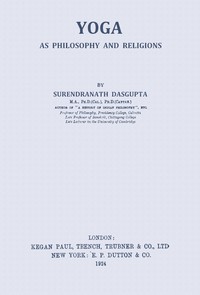
Yoga as philosophy and religion by Surendranath Dasgupta
Okay, let’s get real: I grabbed this book because I wanted to understand *why* I feel so buzzy after yoga class. I didn't want rules about breathing or standing on my head—I wanted the *why*. Dasgupta delivered, and my coffee table book pile hasn't recovered since.
The Story
Think of 'Yoga as Philosophy and Religion' as a secret history lesson. Dasgupta starts way, way back with ancient Indian texts, showing how yoga wasn't just physical exercise. It was a radical idea: your mind is a messy room, and through meditation and ethics, you can tidy it up enough to see reality without all the lies. He explains how yoga philosophy duked it out with other schools of thought—arguing about who we are, what the universe is made of, and whether suffering is built into life. The 'story' unfolds like a cosmic courtroom drama, with samsara (the wheel of death and rebirth) as the villain and enlightenment as the hero. Dasgupta breaks down how yoga's tools—like those postures, breathing tricks, and concentration exercises—were really intended to tear down the barriers between your little self and something much bigger. The cool part? He shows how these ideas connect to Buddhism, Jainism, and later spirituality, creating a map of how one philosophy evolved and spread.
Why You Should Read It
I read this with a highlighter on, and my brain went *pop* about seven times. Dasgupta makes complicated ideas feel like good gossip—old debates that are still bubbling under the surface of modern culture. My favorite part was learning that yoga intended to untangle our *stuff*—the habits, fears, reactions we protect. Also I love how un-squishy he is. I don’t have to accept anything blindly. For every cosmic claim, he ties it back to honest logic. Among the cool moments: Patanjali deep stuff becomes manageable, the separation of *purusha* (pure consciousness) from *prakriti* (material existence) makes sense. Good insights for anyone working mental health issues; classical literature often explored methods for psychological well-being. Be prepared for challenges to your sneaky beliefs.
Final Verdict
Dense in places? Yes. Did I hit a passage about *kleshas* (obstructions) and text friends? I never felt smarter. Perfect for the serious student: A year dedicated, thick lines practice’s source philosophy The copyright for this book has expired, making it public property. Share knowledge freely with the world.
Don't pick up for easy relaxing.
Elizabeth Jackson
8 months agoA sophisticated analysis that fills a gap in the literature.
Matthew Hernandez
2 years agoThe methodology used in this work is academically sound.
Emily Brown
1 year agoThe peer-reviewed feel of this content gives me great confidence.
Michael Brown
10 months agoI decided to give this a try based on a colleague's recommendation, the nuanced approach to the central theme was better than I expected. I'm glad I chose this over the other alternatives.







Richard Taylor
8 months agoI was skeptical about the depth of this book at first, but the historical context mentioned in the early chapters is quite enlightening. I'll be citing this in my upcoming project.