
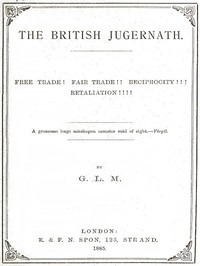
The British Jugernath: Free trade! Fair trade!! Reciprocity!!! Retaliation!!!!
Published in 1881, this book isn't a novel. It's a fiery piece of political argument, a snapshot of a national anxiety attack. Britain, the 'workshop of the world,' is starting to feel the heat. New industrial powers like Germany and America are rising, and they're protecting their own markets with tariffs. Meanwhile, Britain is still deeply committed to its policy of Free Trade—importing goods with little to no taxes. Molesworth thinks this is a recipe for disaster. He argues that Britain is fighting with one hand tied behind its back, and it's time to adopt 'Fair Trade' (reciprocity) or even 'Retaliation' to force other nations to open their markets.
The Story
There's no traditional plot with characters. Instead, the 'story' is the clash of ideas. Molesworth lays out his case like an engineer building an argument. He piles up statistics on imports and exports, points to struggling industries, and warns of national decline. He personifies the 'British Juggernaut'—this massive, powerful economic engine—and fears it's about to crash because its drivers (the politicians) are too dogmatic. The tension comes from his urgent, almost desperate, plea for change against the weight of established economic doctrine. It's a manifesto, a warning siren in book form.
Why You Should Read It
What grabbed me was the shocking familiarity of it all. Reading Molesworth's complaints about foreign subsidies, 'unfair' competition, and the loss of manufacturing jobs feels like reading today's headlines, just with different country names and fancier prose. It completely shatters the idea that globalization debates are new. You get to see the raw, emotional roots of protectionism and nationalism in economic policy. Molesworth isn't a dispassionate analyst; he's a worried patriot, and that passion leaks through every sentence. It makes a dense topic feel human and urgent.
Final Verdict
This is a niche but fascinating read. It's perfect for history buffs, economics nerds, or anyone fascinated by politics. If you enjoy primary sources that let you touch the past directly, this is a gem. It's not an easy beach read—you have to be ready for 19th-century writing and lots of talk about pig iron and tariffs. But if you stick with it, you'll get a front-row seat to a pivotal moment when Britain was forced to question the very economic religion that had made it an empire. You'll come away understanding that the fights over trade have always been about more than money; they're about identity, power, and fear of the future.
There are no legal restrictions on this material. You do not need permission to reproduce this work.
Liam Anderson
2 months agoSimply put, the arguments are well-supported by credible references. Exceeded all my expectations.


Melissa Brown
1 year agoI had low expectations initially, however the storytelling feels authentic and emotionally grounded. A valuable addition to my collection.