
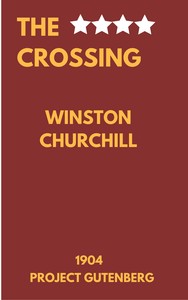
The Crossing by Winston Churchill
I picked up 'The Crossing' expecting a straightforward historical adventure. What I found was something much richer—a novel that feels less like a history book and more like a letter from the past, full of mud, doubt, and hard choices.
The Story
The story follows David Ritchie, a capable but ordinary young man from Virginia. Seeking opportunity, he joins the flood of settlers moving into the Kentucky territory, a land promised by treaties but fiercely defended by its Native inhabitants. David builds a life in this dangerous paradise, but the distant rumblings of the American Revolution soon crash onto his frontier. The settlers are fractured. Some, like the fiery leader James Ray, are fervent patriots. Others, like the pragmatic John Temple, argue that their survival depends on British support against constant tribal raids. David finds himself and his community ripped apart by this civil war within a revolution, where the enemy isn't just a redcoat across a field—it's the family in the next cabin.
Why You Should Read It
Churchill's genius is in the intimacy of his storytelling. He doesn't give us generals and politicians; he gives us farmers, hunters, and mothers. The big ideas of liberty and loyalty are tested around campfires and in cramped blockhouses. David is a fantastic guide—he's not a superhuman hero, but a decent man trying to protect his friends and his future in a situation where every option is bad. The book asks tough questions: What do you do when your government can't protect you? Is it treason to choose safety for your family over a political cause? The frontier setting is a character itself, breathtakingly beautiful and brutally unforgiving, a constant reminder of what's really at stake.
Final Verdict
This book is perfect for anyone who loves historical fiction that focuses on people, not just events. If you enjoyed the frontier spirit of 'The Last of the Mohicans' but wished it spent more time on the settlers' internal struggles, you'll love this. It's also a great pick for readers who think they don't like 'history books'—this is all heart-pounding drama and moral complexity, with the history as a compelling backdrop. Just be ready: the 'good guys' and 'bad guys' aren't easy to spot, and that's exactly what makes it so memorable.
There are no legal restrictions on this material. You are welcome to share this with anyone.
Linda Miller
2 months agoThis was exactly the kind of deep dive I was searching for, the argument presented in the middle section is particularly compelling. Highly recommended for those seeking credible information.
John Thompson
5 months agoIt took me a while to process the complex ideas here, but the narrative arc keeps the reader engaged while delivering factual content. This exceeded my expectations in almost every way.
Matthew Martin
5 months agoThe author provides a very nuanced critique of current methodologies.
James Garcia
2 years agoIf you're tired of surface-level information, the nuanced approach to the central theme was better than I expected. If you want to master this topic, start right here.

Linda Brown
1 month agoIt’s rare to find such a well-structured narrative nowadays, the bibliography and references suggest a high level of research and authority. I'll be citing this in my upcoming project.